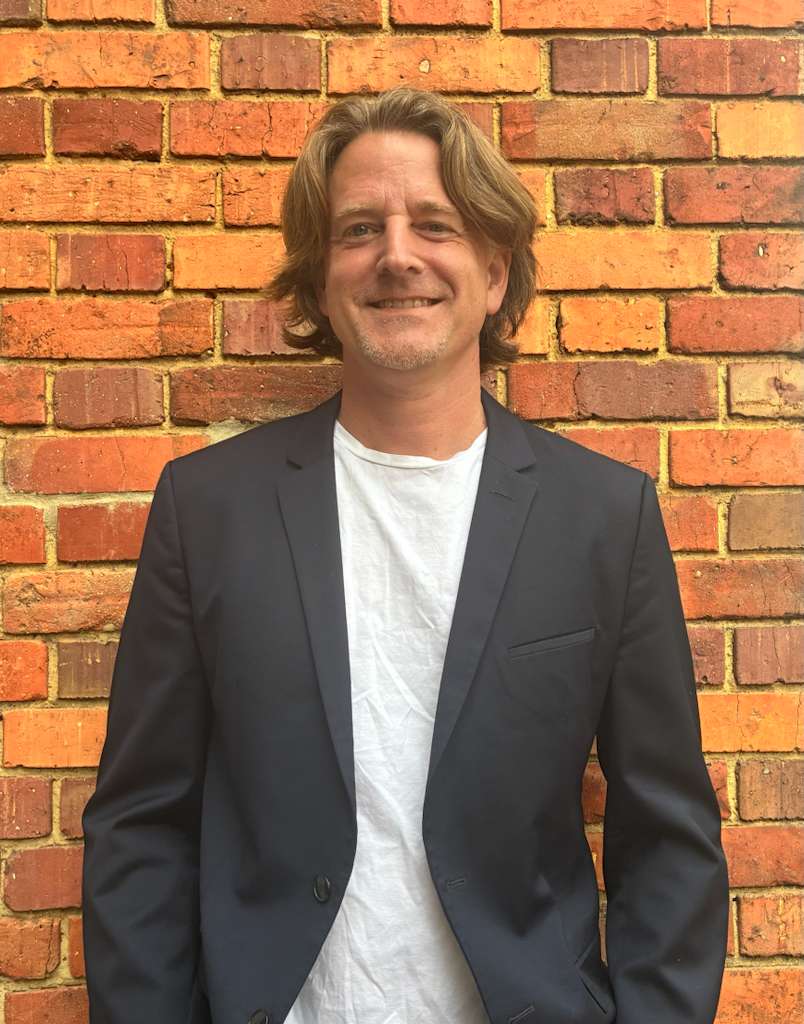
Community lead for the AI Alliance, the open-source AI consortium spanning models, data, evaluation and safety. Represented it at 15+ international conferences including NeurIPS and FOSDEM, ran dozens of meetups end to end across North America and Europe. AI-assisted prototyping and web development, community ops automation.
Open Source Science (OSSci)
Community Lead, IBM Research ·2022 – 2025
Helped launch and build OSSci, a NumFOCUS initiative sponsored by IBM connecting open-source research software to the researchers who depend on it. Program design, global ecosystem engagement.
IBM Data Science Community
Community Program Manager, IBM ·2019 – 2022
Community specialist on the IBM Data Science Community team, running day-to-day operations through an early growth phase. Helped take it past 25,000 members and built the global meetup outreach program.
I’m not a web developer or software engineer, so being handed these new AI superpowers has been nothing short of amazing. Since late 2024, I’ve shipped a range of (social) web apps using AI-assisted tools (Lovable, Claude Code, among others), covering a broad range of use cases.
Every project ships against the same baseline:
In-depth product requirements document (PRD)
Mobile first
Accessibility (WCAG)
Privacy by design
Automated tests on every load-bearing path
Built in public (open specs, open build log)
And much more…
Each project is run by its own AI agent. They share one versioned library of standards, so when one project finds a rule is wrong, the fix reaches all of them.
A couple of projects use AI agents for automated web search and data processing.
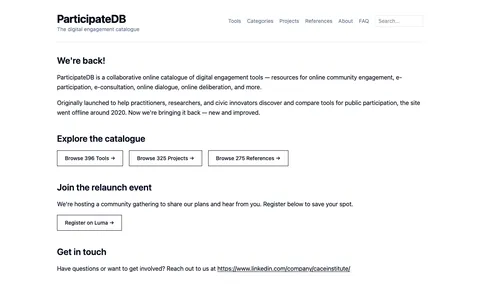
The most comprehensive global directory of e-participation tools, projects and references. First launched in September of 2009, the site went dark around 2021 due to maintenance issues, taking a decade of the field’s institutional memory with it. Scripted the catalog out of Archive.org snapshots and reverse-engineered the app: 396 tools, 327 projects, 276 references.
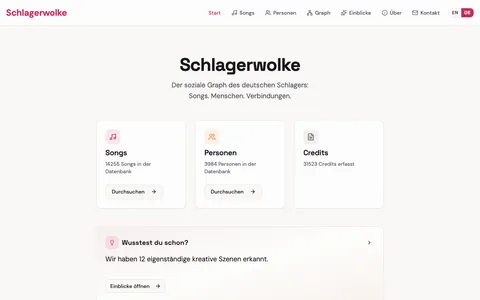
The social graph of German Schlager credits: who wrote what, who performed it, and where the data came from. Built and maintained by two AI agents running locally on a cron schedule: Crawler, which decides what is worth reading, and Sherlock, which reads it and records every claim it finds — including the ones that contradict what is already there, because a conflict is data rather than an error. 14K songs, 3K people, 31K credits and counting (as of September 29, 2026), each sourced and confidence-scored.
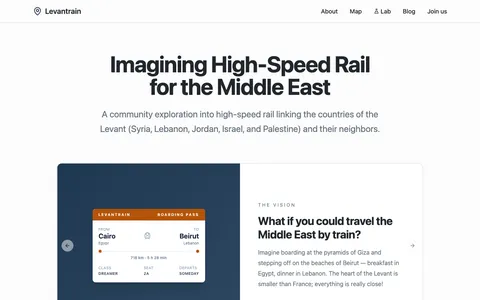
A peacebuilding initiative envisioning a Middle East (re-)connected by high-speed rail. Advanced georeferencing pipeline, turning scanned images of 19th- and 20th-century survey maps into usable geodata, with measured accuracy. Every record carries its source. Full dataset is open source.
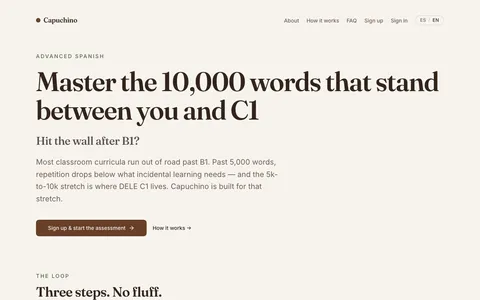
A vocabulary trainer for advanced Spanish learners working toward the DELE C1: the top 10,000 high-frequency words. A short stratified assessment across frequency bands estimates where your knowledge stops — the cliff most learners hit past B1 — and the app works the long tail beyond it, then exports to whatever spaced-repetition tool you already use. A separate Python pipeline builds and ranks the word list. I’m the target user, building it against my own exam prep.
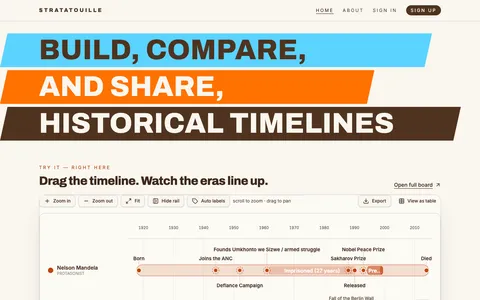
Scaled, multi-lane history timelines built for visual comparison — seeing what overlapped what. One-click import of structured data from Wikidata, and the whole app runs bilingual in English and Spanish.
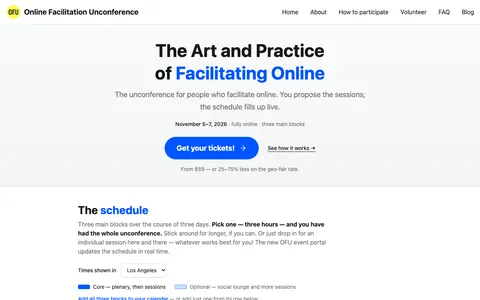
Event operating system for OFU 2026, a virtual gathering I instigated in 2013. Self-serve partner and sponsor onboarding, participant-driven unconference session planning, volunteer management, event report generation.
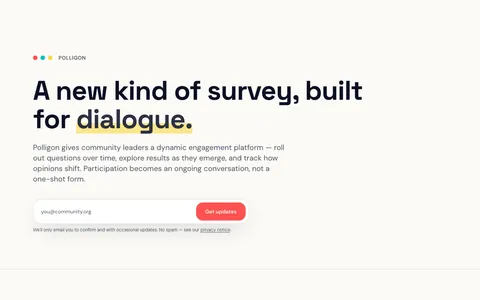
Re-imagining the online survey: questions roll out over time, participants watch results emerge, and shifts in opinion get tracked. Agile, where the traditional survey is waterfall. The spec was stress-tested before it was built — an adversarial review of the requirements document that surfaced 58 issues, 14 of them serious enough to block, while they were still cheap to fix.